Electric cars are starting to change how homes use energy, not just how people travel.
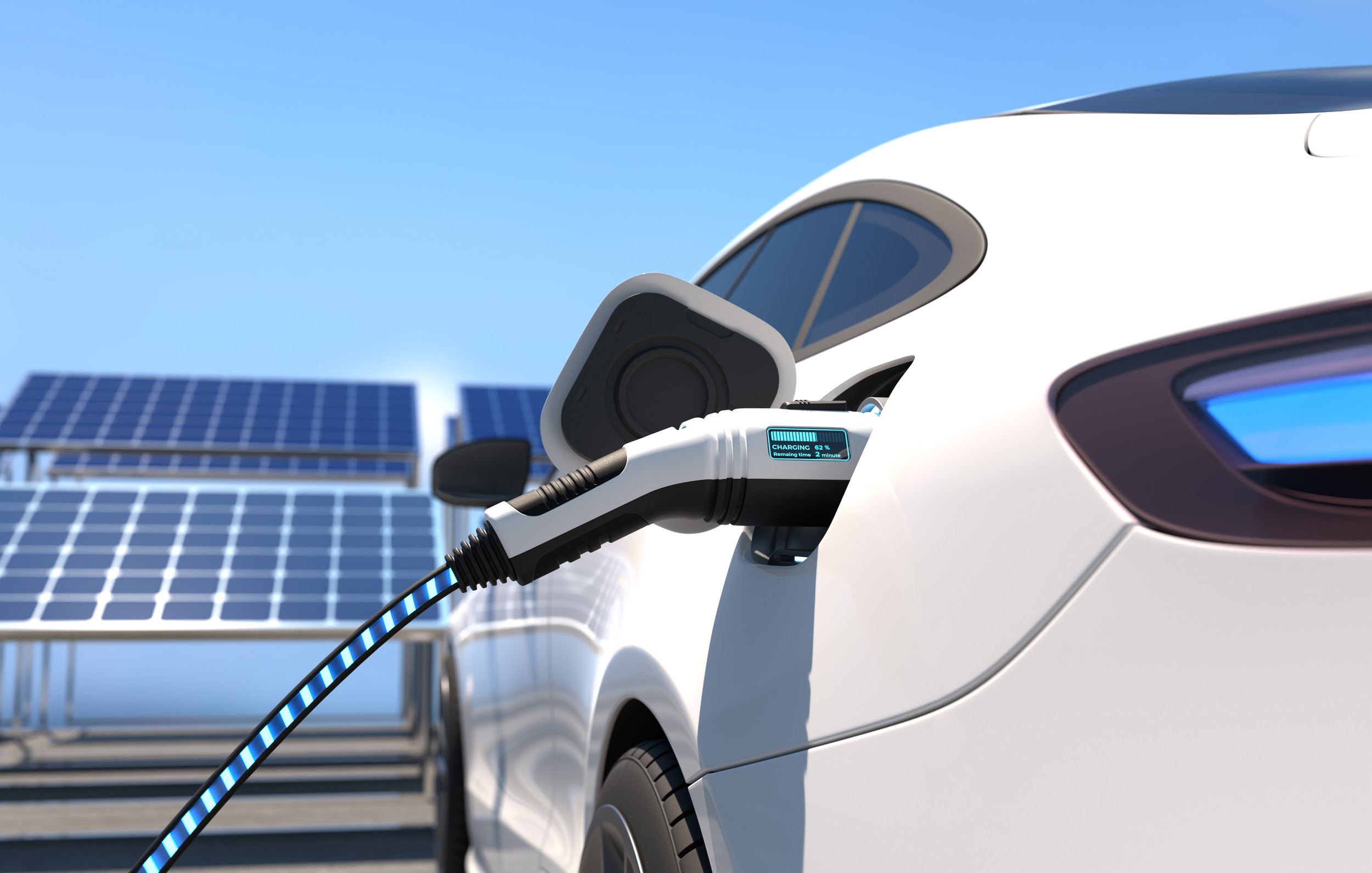
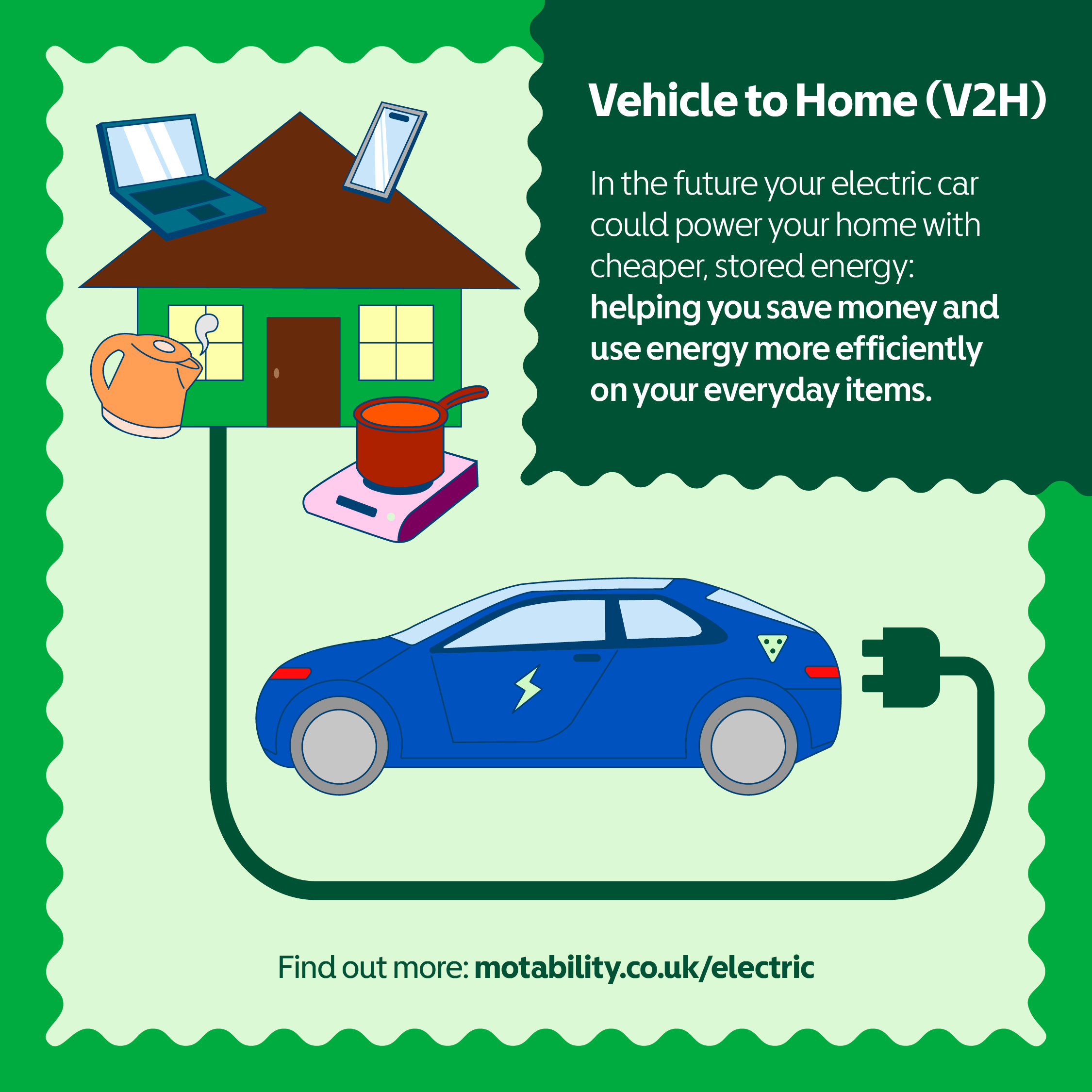
Vehicle to Home, often shortened to V2H, lets you use the energy stored in your electric car to power your home. When electricity is cheaper, your car charges. When prices rise, your home can run on that stored energy instead.
Done well, this could help lower energy bills and reduce reliance on the grid at busy times.
V2H uses a bidirectional charger. This allows electricity to flow both ways, into the car and back out to the home when it’s needed.
A charging app manages this in the background. It schedules charging when electricity is cheaper, often overnight. Later, when electricity prices are higher, it powers the home using energy from the car instead.
You stay in control. You can set a ready-by time, so your car is charged when you need it. You can also set a minimum battery level, so there’s always enough power for journeys.
V2H works best when the car is plugged in most days. The more often it is connected, the more chances there are to use cheaper electricity. Worried about leaving your electric vehicle (EV) plugged in? Here’s a handy guide that covers everything you need to know.
At a glance, V2H has some clear potential benefits, along with a few current limitations.
-
Using cheaper electricity more effectively, with the potential to reduce energy bills
-
Making better use of energy already stored in the car
-
Supporting greener energy use, especially when combined with renewables
-
Only works with certain electric cars and specialist home chargers
-
Savings depend on having the right energy tariff
-
Availability is limited and the technology is not yet widespread
V2H could bring a few everyday benefits, depending on how you use your car and energy tariff.
Lower energy bills
V2H helps you use more electricity at cheaper times of day. Your car charges when prices are lower, then powers your home when electricity costs more.
More energy independence
Using energy stored in your car means relying less on the grid at busy times. If you have solar panels, you can also store energy during the day and use it in the evening.
Greener energy use
V2H can help make better use of renewable electricity, like wind and solar power, by storing it when more is available and using it later.
What are the current limits of Vehicle to Home?
Vehicle to Home shows promise, but there are a few things to keep in mind.
Energy tariffs
Flat-rate tariffs charge the same price all day, which limits savings. Two-rate or EV tariffs usually work best.
Car and charger compatibility
Not all electric cars support bidirectional charging. You need both a compatible vehicle and a compatible charger.
Home setup
A smart meter and reliable Wi-Fi are usually needed so the system can work properly.
Daily routine
Savings are lower if the car is not plugged in regularly.
Not widely available
At the time of publication in January 2026, V2H is not offered on the Motability Scheme at the moment.
V2H is growing, but it is not yet widely available in the UK. Bidirectional home chargers are not currently on general sale.
However, Energy Solutions says V2H technology is expected to become more widely available in 2026, as more EVs and home chargers support it.
We are tracking progress closely and will share updates as compatible vehicles, chargers and tariffs become available.
To make V2H work, a few pieces need to come together at home.
-
A compatible electric car
-
A bidirectional home charger
-
A smart meter and Wi Fi
-
An energy tariff that supports V2H
-
A phone or tablet for the charging app
V2H fits around normal routines.
Evening energy use like cooking, lighting and watching TV could run from energy stored overnight. Appliances can be used knowing that the electricity came from cheaper hours.
For homes with solar panels, energy generated during the day could be stored in the car and used later in the evening.
Over time, this shift can add up to real savings.

The savings depend on your energy tariff and how often your car is plugged in. But for some households, V2H could make a noticeable difference.
For example, shifting around five kilowatt hours a day from peak times to cheaper off-peak times could save close to £1 a day. That’s roughly £25 to £30 a month, or around £300 a year.
To put that into context, five kilowatt hours is enough to boil a kettle around 40 times. Or it could run one washing machine cycle and one dishwasher cycle, with enough left to watch about 30 hours of TV.
A qualified chargepoint installer would take care of the technical work. They would also explain anything else needed, like checks on your home electricity supply.
Right now, V2H chargers are not available through the Motability Scheme. That means there’s nothing to arrange yet. We’re keeping a close eye on how the technology develops and will share updates as things change.
As more electric cars and chargers support bidirectional charging, V2H could become part of everyday life.
It has the potential to help households manage energy costs, make better use of renewable power, and get more value from an electric car.
Find out how some electric cars can power everyday items like kettles and mobility equipment and how EVs send energy back to the grid, helping balance demand and potentially earn money for charging at the right times.
The Scheme’s all-inclusive package means that when you lease an EV for the first time, we’ll arrange a home chargepoint and a standard installation as part of your lease.
If you cannot get a home chargepoint and it’s your first fully electric car on the Scheme, we’ll offer you a subscription to the bp pulse network.