When your car makes an unusual squeal, simper, or other strange sound, it’s usually trying to tell you something. Listening carefully can help you spot problems sooner. We’ll explain what common car noises mean and when to get them checked.
Some car noises are as harmless and normal. Others are clear signals that something’s wrong. We’ll help you recognise the difference. Paying attention to unusual sounds can help you keep your vehicle safe and reliable between MOT checks.
Why cars make strange sounds
Your vehicle is made up of thousands moving parts, all of which can create noise. While some sounds are normal, others can signal something more serious. We’ll help you tell the difference.
Common car sounds and what they mean
Sometimes scary noises mean nothing and simple noises mean something. All cars make these common sounds, but some of them are worth checking out:
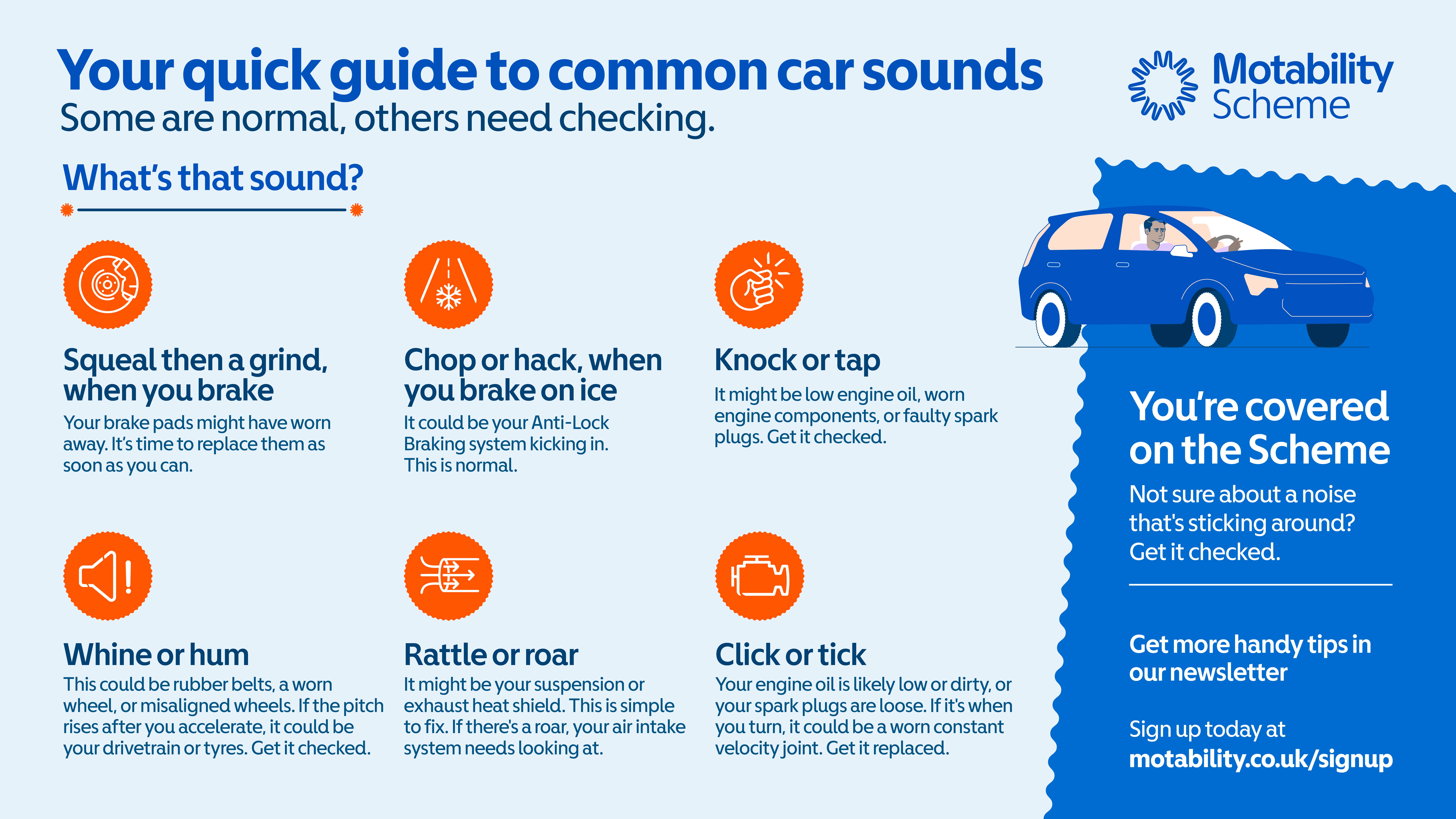
Squeal then a grind, when you brake
This is a strong sign your brake pads are wearing out and need replacing. Get your vehicle looked at soon. Just book a maintenance check with your local dealer.
If the squeal turns into a grinding noise, the brake pads might be fully worn. It’s dangerous, so get your car checked as soon as possible.
Another cause of a squealing noise could be harmless moisture, after it rained, or you’ve washed your car. It’s because a thin film of water temporarily affects your rotor. If the sound goes away after you’ve stopped a few times, it’s nothing to worry about.
Can I drive with a squealing and grinding sound? No, get it looked at as soon as you can.
Chop or hack, when you brake on ice
In icy weather, your brakes can make a scary hacking noise when you brake hard. This can sound alarming, but it’s just your vehicle’s Anti-Lock Braking system preventing your wheels from locking. There’s no need to call for help. If the issue persists or if you’re concerned, contact your dealer.
Can I drive with a hacking sound? Yes, it’s normal on ice.
Knock or tap
This is a sign there is something in your car is not working as it should. You’re more likely to notice it when driving over bumps and turning.
Common causes include low engine oil, worn engine components, or faulty spark plugs. These can lead to more serious damage, so it’s best to get your car checked.
Can I drive with a knocking or tapping sound? No, get it checked.
Whine or hum
This can happen when rubber belts dry out in warmer weather. Belts wear over time, so it’s worth getting the noise checked before it leads to a bigger repair.
Listen for changes in pitch. If the sound gets higher as you accelerate, it could point to an issue with the drivetrain, tyres, or bearings.
If the noise appears at higher speeds, it might be caused by a worn wheel bearing, or misaligned wheels. Check the condition of your tyres. If they look uneven, contact Kwik Fit.
Can I drive with a whining or humming sound? No, get it looked at soon.
Can you hear an EV’s dog whistle?
EVs are much quieter than traditional vehicles, so you can expect fewer noises. One noise you might hear is a high-pitched whine, sometimes called a ‘dog whistle’. It comes from your EV’s motor or inverter and it’s completely normal. Most people never notice it.
Rattle or roar
A snake-like rattle often points to an issue underneath your car. If it happens when you drive over bumps, it could be linked to the suspension or exhaust.
A common cause is a loose exhaust heat shield. This is a protective barrier that helps manage engine heat and is usually quick for a repairer to resecure.
A loud roaring sound, like a Formula 1 car, could indicate a problem with the air intake system.
Can I drive with a rattling or roaring sound? No, get it seen to.
Click or tick
After a long drive, your engine may make a ticking sound as hot metal parts cool down and contract. This is normal, if it stops after a while.
If the ticking continues, it could be due to low or dirty engine oil, or loose spark plugs. Either way, get your car checked.
If the sound only occurs when turning the wheel, it may point to a worn constant velocity (CV) joint. This affects vehicle safety, so it should be replaced.
Can I drive with a clicking or ticking sound? Yes, it if stops by itself. If it continues, get it checked.
If it’s only when you manoeuvre
Pay attention to what you’re doing when the noise sounds. Does it happen when you accelerate, brake, turn, or are stationary?
The RAC have a great guide on sounds you’ll only hear when you’re doing certain manoeuvres.
When to get car noises checked
You should act as soon as you can if the sound is:
-
New and unusual
-
Getting louder
-
Happening more often
-
Affecting how your car drives
The quicker you get it looked at it, the less time you’ll be without your vehicle and the less disruption you’ll face. If you’re concerned, contact your dealer.
Keep this handy guide of everything we’ve covered somewhere you can access it easily. That way, you’ll know what action you need to take the next time your car makes an unfamiliar sound.
Get it checked on the Scheme
We cover repairs as part of your all-inclusive package.
-
Just contact your dealer and they’ll book your vehicle in for maintenance
-
If it’s about your tyres, contact Kwik Fit
-
If your vehicle will not start or is not safe to drive, contact the RAC
-
If the damage cannot be repaired, contact us
Never worry about wasting someone’s time or leave unusual noises unchecked. Your safety is important and our partners are always there to support you.
Want more handy tips like these?
Sign up to our newsletter to get other useful car tips, and much more.