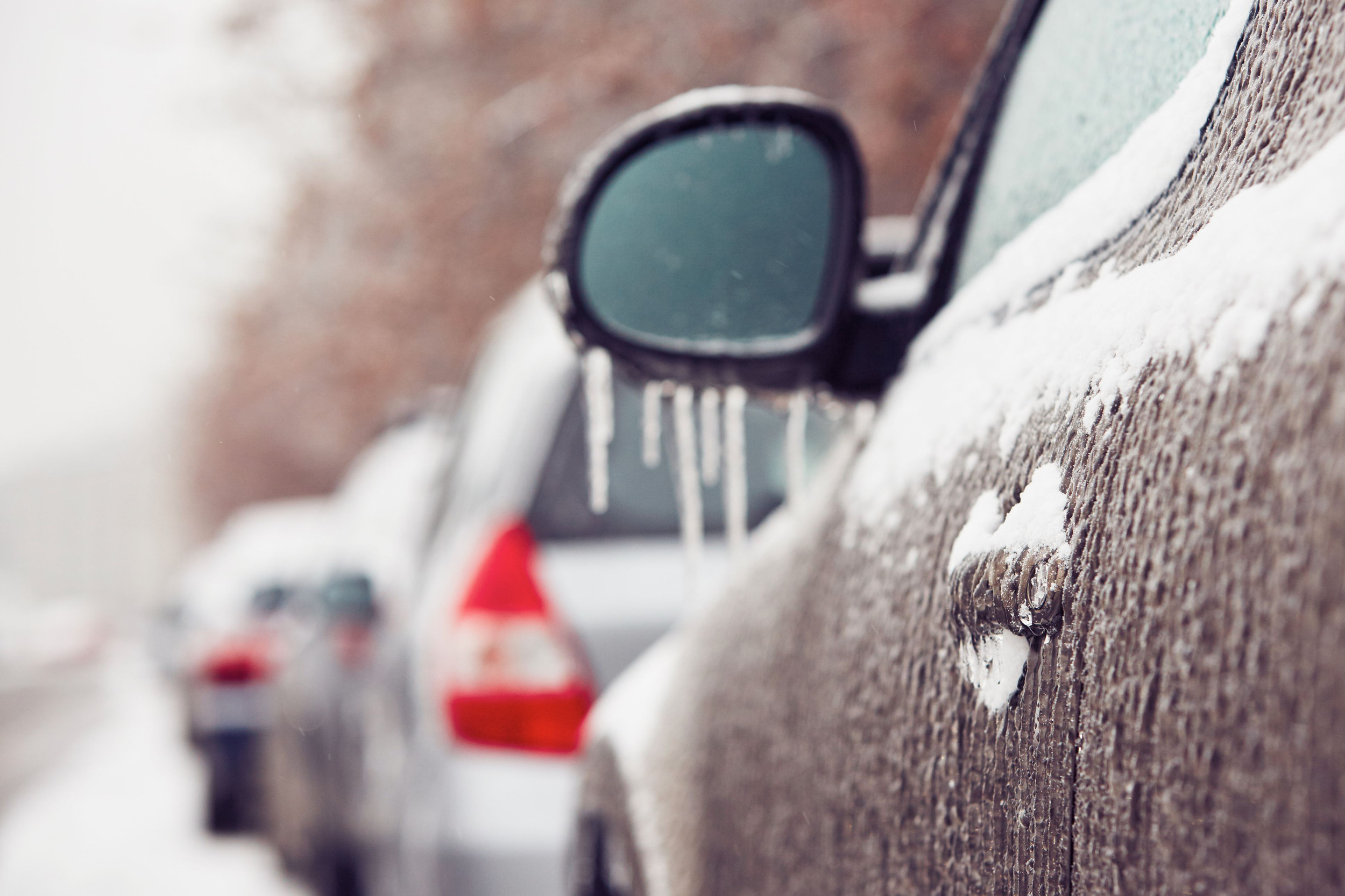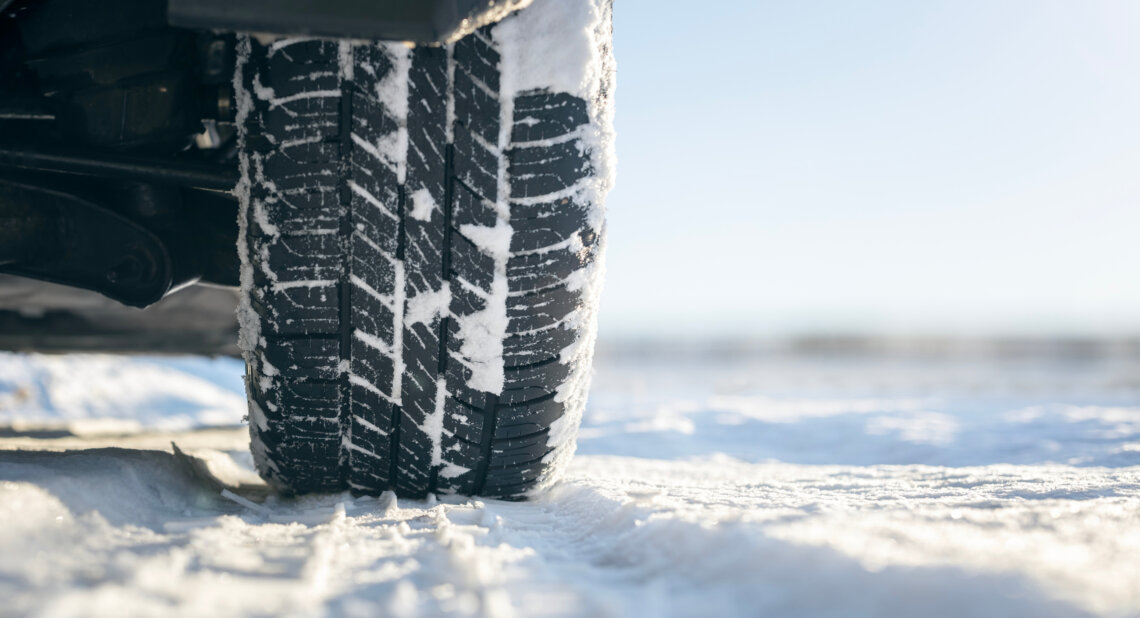
Winter tyres, sometimes known as ‘snow tyres’, are designed to give extra grip in cold conditions, such as snow, ice and very low temperatures. But they’re not essential for everyone in the UK, and many drivers manage well with standard tyres throughout winter.
If you decide they’re right for you, Kwik Fit can fit winter tyres to your Scheme vehicle, as long as you let us know first.
The UK’s tyre safety charity, TyreSafe, highlight that cold and damp roads can affect the performance of your tyres, so it’s important to take extra care when driving in winter conditions.
It takes 10 times longer to stop after you brake on ice, compared to a dry road.
We’ll guide you on the best winter tyres to buy and how Kwik Fit can help if you decide they’re right for you.
Winter tyres help your car grip the road better in cold, icy or snowy weather.
| Winter tyres | Standard tyres |
| High rubber content | Less than half rubber content |
| Deep tread pattern | Shallow tread pattern |
| Strong grip in the extreme cold | Low grip in the extreme cold |
| Strong traction and grip | Low traction and grip |
| Wear down very fast in warm weather | Wear down fast in warm weather |
| Tend to be noisy | Can be noisy |
When should you fit winter tyres?
The Met Office says winter tyres can perform better when the temperature falls below 7°C. Below this, the tread in standard tyres begins to harden, which gives your vehicle less grip.
Winter tyres are good for combating snow, ice, frost, and wet roads, so people tend to use them from Autumn to early Spring, depending on where they live.
Some people think winter tyres are only for when it’s snowing, but they’re designed for whenever the temperature drops. So make your decision based on where you live, how cold it gets, and what feels right for your driving needs.
Winter tyres are not a legal requirement in the UK. If you live in a remote area or somewhere with lots of extreme weather, consider having chains or socks fitted to your vehicle too.
Checking your tyre pressure
Checking your tyre pressure regularly helps you stay safe on the road and reduces uneven tyre wear. It’s best to do this when your tyres are cold.
You can use a tyre pressure gauge, or the air machines at most petrol stations. Check the reading against the recommended pressure for your car. You’ll find this in your vehicle handbook or inside the driver’s door frame. If needed, adjust the pressure and remember to check all four tyres.
If you’re on the Motability Scheme, servicing, maintenance and repairs are all included in your all-inclusive lease. This includes tyre support through Kwik Fit. They can check your tyre pressure and tread depth, and replace tyres when depth falls to 2.0mm.
Keeping your tyres correctly inflated is especially important in colder weather. But it’s a simple check that’s worth doing all year round.
Choosing the best winter tyre for your vehicle
Oregon Department of Transportation. Licensed under CC BY 2.0.
The first step is spotting what a winter tyre looks like. They tend to come in two types:
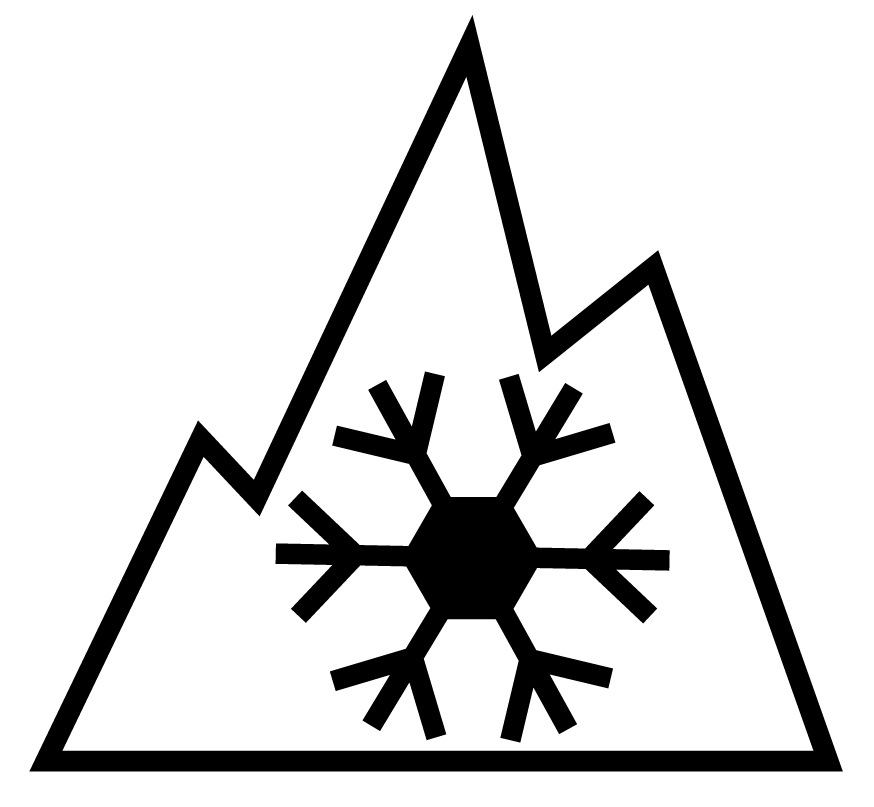
3PMSF
- In 2012, a new ‘Alpine’ symbol was introduced to help people identify 3PMSF tyres
- This is the outline of a three-peaked mountain, with a snowflake inside it
- It means they’ve been tested to meet a mobility and safety standard
- They’re becoming the norm for recognising a good quality, legally classified winter tyre
M+S
- This means a mud and snow tyre
- They’re good for snowy or muddy roads
- These are not tested in the same way as 3PMSF tyres are
- Their standard is entirely up to the manufacturer
Winter tyres have thousands of small grooves in their tread blocks. These help disperse water and reduce the risk of aquaplaning, which is when your tyres lose traction on a wet road.
Did you know? The more snow that builds up inside your winter tyre’s tread pattern, the better your tyre will grip. This is thanks to the natural gripping qualities of snow.
If you’d like winter tyres, Kwik Fit can fit these to your vehicle for you but you’ll need to let us know before you arrange this. Just call or message us first.
You’ll be responsible for the cost of:
- The winter tyres
- Fitting the winter tyres
- Storing your standard tyres with Kwik Fit
- Re-fitting your standard tyres
While using your winter tyres, you can store your standard tyres in a separate bag. Kwik Fit will give you this, for each tyre. You’ll need to store them flat on the ground (so the tread pattern is not face down).
If you’re short of space, you can book your standard tyres into the Kwik Fit ‘Tyre Hotel’, for an extra cost. They’ll be safe there until you have them re-fitted after winter.
Winter tyres are not suitable for normal road conditions, so when the weather improves, you’ll need to arrange for your standard tyres to be refitted. If you reach the end of your lease, you’ll need to return your vehicle with standard tyres fitted.
There are some practical checks you can do to make sure you’re looking after your tyres properly during your lease, especially when you’re going on longer journeys.
- Check your tyre pressure more often in the winter. The cold can make them drop quicker, so keep an eye on them, and top them up often
- Legally, tyres need to be replaced when the tread depth falls to 1.6mm on 75% of the contact surface
- Kwik Fit will replace tyres on Scheme vehicles when the depth falls to 2.0mm
- Not sure about your depth or pressure? Contact Kwik Fit to book an appointment
- Never use sharp manoeuvres while you’re driving, and drive gently
- Stick to a safe speed and distance from the car in front
- Preheat your vehicle when you can
If you decide to go without winter tyres, it’s still important to check a few things on your vehicle first. Like the air pressure and tread depth of your current tyres, to make sure they can handle the cold weather. Always check your vehicle’s manual.
Is the cost worth it?
Winter tyres in the UK cost between £50 and £200 per tyre, on average. Your total price will depend on the size, brand, and quality. You can expect to pay around £200 for a set of four, on a smaller vehicle.
Some people feel they’re worth paying for, as the extra grip can be reassuring in colder conditions and may help reduce unexpected repair costs.
You may find them more useful if you live in a typically cold climate, like Scotland. Or a rural area prone to regular cold spells.
Speak to your dealer if you’re not sure. They can talk to you about your journeys and help you decide what’s right for you.
We’ve covered everything from what winter tyres do to how much they cost. Here’s a handy summary:
- They grip the road better in cold weather
- Only use them in the winter, when the temperature drops below 7°C
- Winter tyres cost between £50 and £200 per tyre, on average
- Look for the 3PMSF alpine symbol, so you know they’re good quality
- Kwik Fit can fit them for you, but you’ll need to ask us first
- Check the pressure and tread depth of your tyres. And drive gently
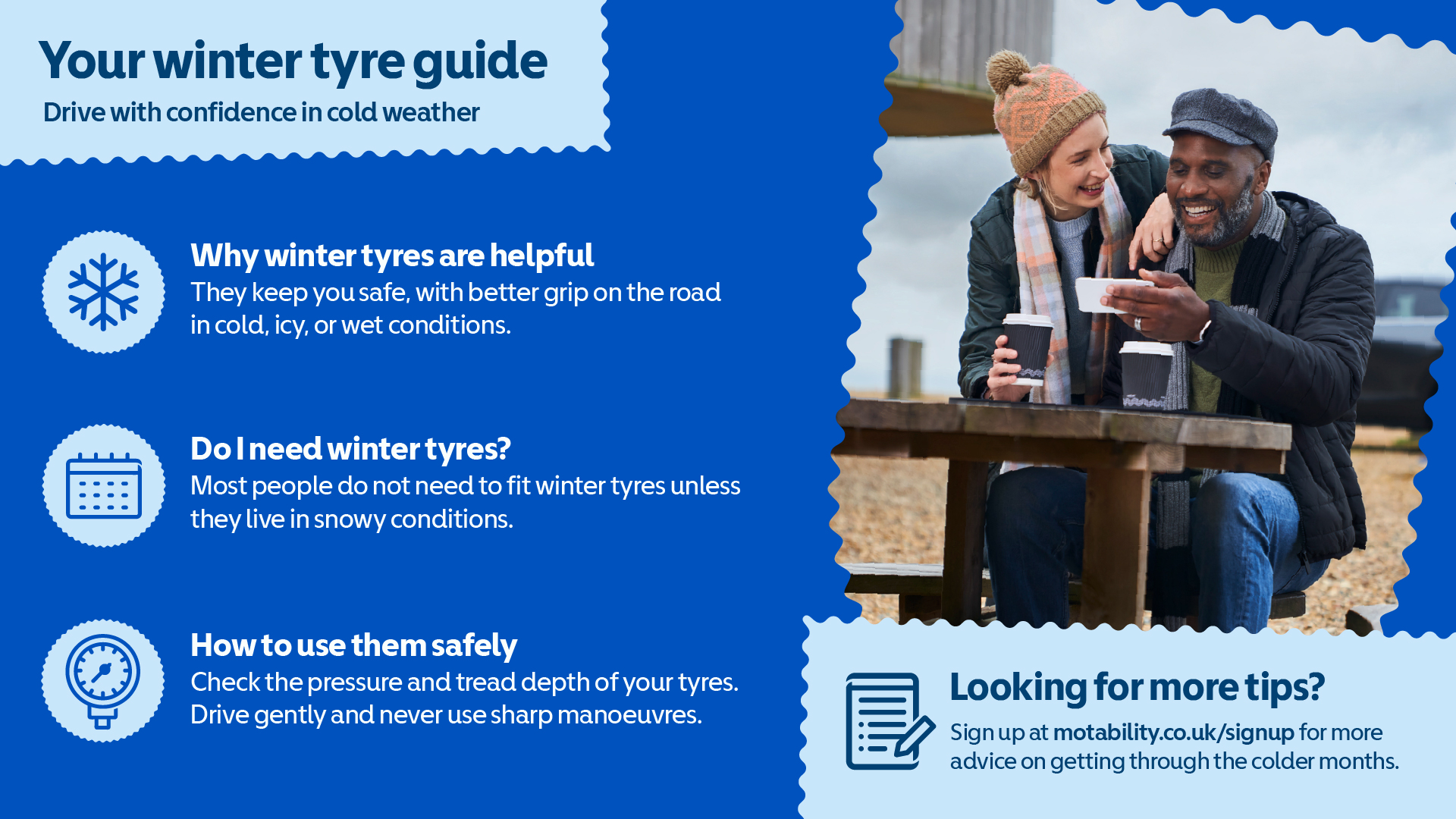
Look at your driving habits, where you live, and what the weather tends to be like. Then decide whether winter tyres feel right for you.
If you have an electric vehicle (EV), check out our guide on how to look after your EV during cold weather too.
Ready to get a Scheme vehicle?
If you receive a qualifying mobility allowance you can use it to lease a vehicle, Wheelchair Accessible Vehicle (WAV), scooter or powered wheelchair on the Motability Scheme.
We cover your insurance, servicing, maintenance and breakdown. And we’ll support you with charging, if you get an electric vehicle.
Featured image credit: BrianAJackson/Getty Images
Related articles
Your guide to safe winter driving
How to look after your EV in cold weather
Stay ahead of flat tyres: How proper tyre inflation keeps you moving