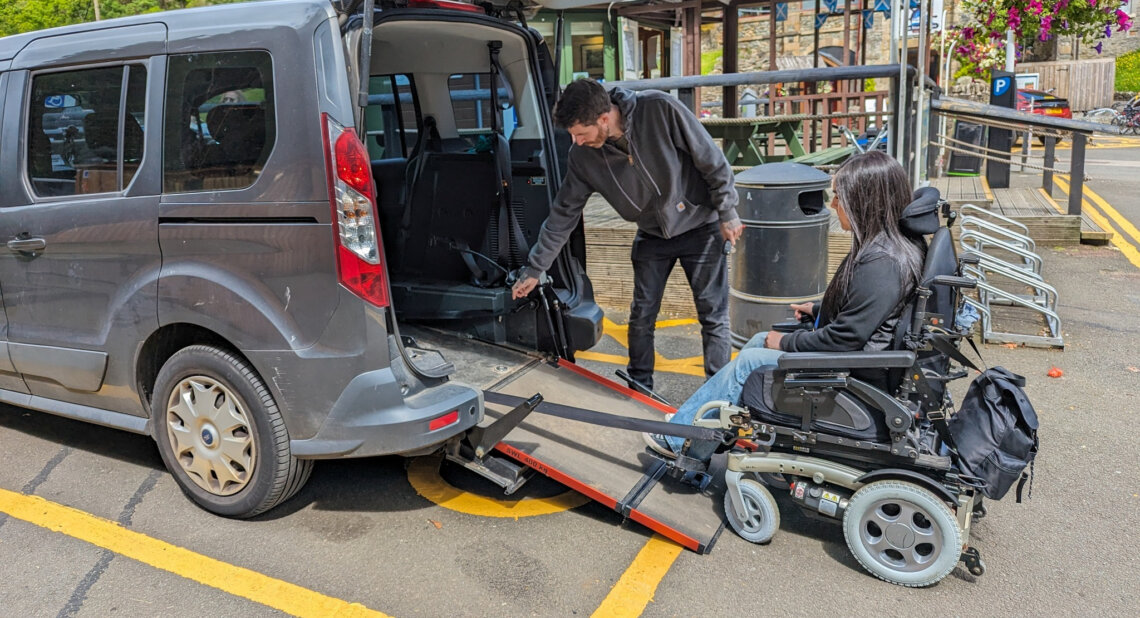
For many Wheelchair Accessible Vehicle (WAV) users, parking can often be a challenging part of the journey. Will the bay be wide enough? Is there enough space to lower the ramp? Will other drivers understand why you need room to get in and out?
These concerns are completely understandable, but with the right information and a little planning, parking can become much more manageable.
This guide from disability writer and Motability Scheme customer Emma Muldoon* brings together practical tips and real-life insight from WAV users to help you travel with confidence.
- What are accessible parking bays
- Making the most of your Blue Badge
- Everyday parking challenges and how to manage them
- Planning ahead for smoother journeys
What are accessible parking bays
Accessible parking bays are designed to give disabled drivers and passengers the space, position, and safety they need when getting in and out of a vehicle. Accessible parking bays are designated for Blue Badge holders and generally include:
- A wheelchair symbol or the word ‘disabled’ marked on the parking bay
- Extra width for ramps, lifts, and wheelchair-to-car seat transfers
- Yellow or white cross-hatched markings that create space to move around the vehicle
- Close proximity to building entrances
- Clear signage showing they are for Blue Badge holders
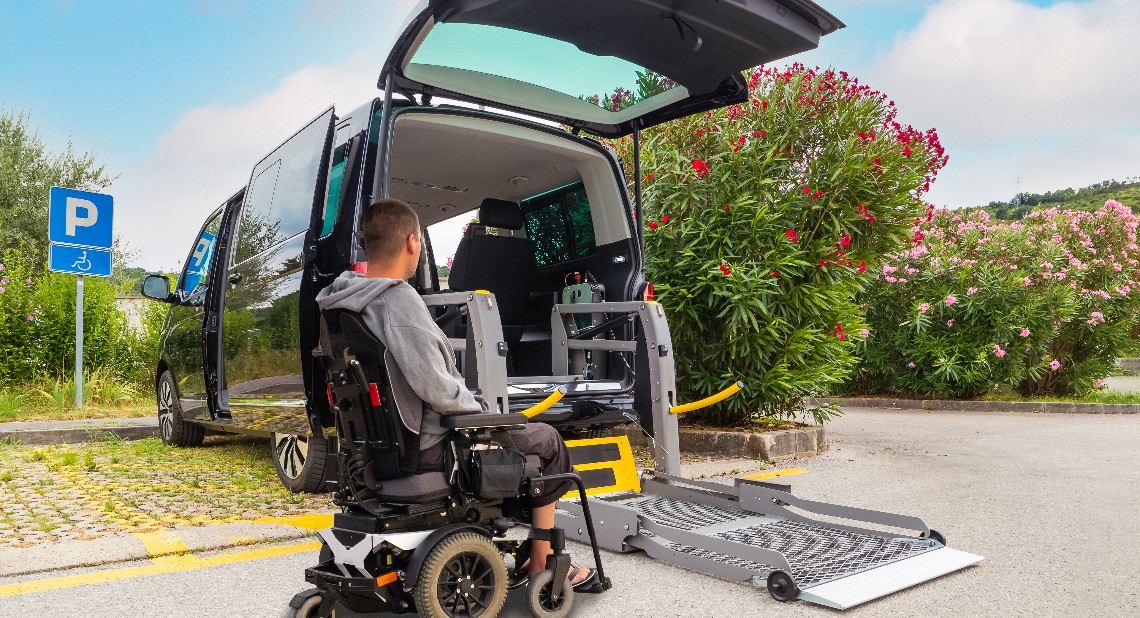
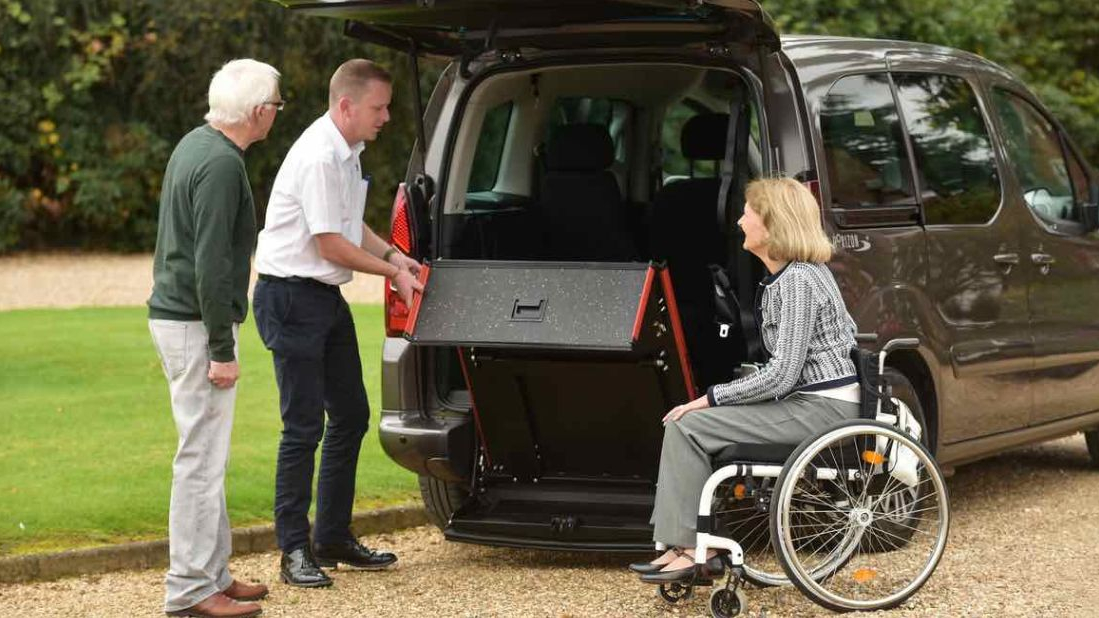
For WAV users, wheelchair accessible parking bays are essential. The extra width and space to deploy a ramp or lift ensure that getting in and out of the vehicle is not only possible but safer.
This is particularly important for Drive-from-WAVs, allowing users who drive directly from their wheelchairs to travel independently with confidence and freedom. With some planning, you can confidently navigate your journeys, knowing you have safe access to your vehicle.
Making the most of your Blue Badge
If you have a blue badge, be sure to familiarise yourself with your blue badge rights and responsibilities. You can also read the Scheme’s guide for parking tips for Blue Badge holders if you would like more information.
Everyday parking challenges and how to manage them
Even when accessible parking bays are available, some challenges may arise for WAV users.
Here are some common issues you might come across, along with some tips to help you deal with them:
If the bay is too narrow
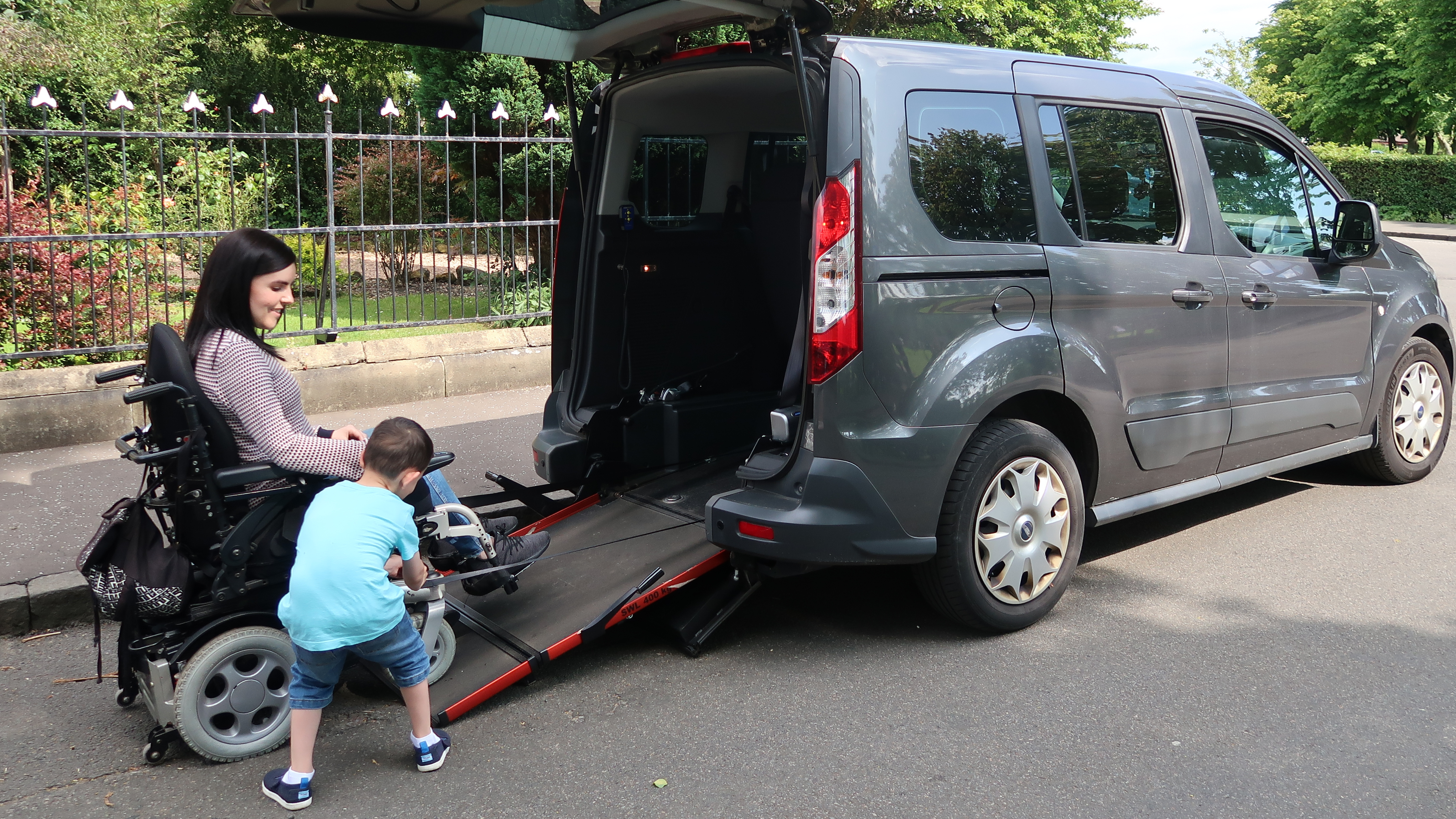
Some WAVs may require more parking space than standard cars. In these instances, you might find that accessible parking bays are too narrow for WAVs with side entry ramps or for larger models.
If this happens, you may need several attempts to position your WAV correctly in the bay to ensure there is enough clearance for the wheelchair user to enter and exit the vehicle. Alternatively, you could try using an end-of-row bay, which might provide extra space for safer access.
Just remember to avoid parking on the hatch markings of adjacent bays to ensure accessibility for everyone.
If the bay is too short
Occasionally, you might encounter bays that are too short, making it difficult for your WAV to fit properly once the rear entry ramp or lift is deployed. This can be more common with older accessible bays that have not been updated to accommodate newer, larger WAVs.
As a passenger, I always have someone driving my WAV, which means they can support me when I’m getting in and out of the vehicle. If the parking bay is too short, we will reverse into a forward-facing space that lets me exit my WAV onto the pavement instead of the road, as long as there are no bollards in the way. This method generally works well and provides me with added safety.
Hatched area on one side of the vehicle
Some accessible parking bays feature cross-hatched markings on just one side. If your WAV has a ramp or lift at the back, this usually will not affect you. However, if you have a side-entry ramp and need to park in this type of bay, you will have to either drive in or reverse, depending on which side the cross-hatched markings are on.
Height restriction barriers
Multi-storey car parks are a convenient option for many drivers, particularly at shopping centres, airports, and city centres. However, large WAVs such as the PEUGEOT Boxer and Volkswagen Transporter are typically taller than most small to medium-sized vehicles. This height difference may cause them to exceed the height restrictions at the car park entrance.
It’s a good idea to know the height of your WAV before entering a multi-storey car park. When planning a day out or a visit to somewhere new, I find it helpful to check the venue’s or car park’s website for information on accessible parking bays and height restrictions. This way, it gives me peace of mind and the chance to find alternative parking options if necessary.
If another car parks too close or blocks access
Another common challenge you may face is returning to your WAV only to find another car parked too closely, blocking access to the ramp or lift. This can be quite frustrating, especially when your vehicle clearly displays signs indicating the need for wheelchair access via a ramp or lift.
You are not alone, many WAV users experience this, but there are ways to make it easier. My partner and I have experience with this as well. While it’s not ideal, he drives forward if there is enough space or moves our WAV out of the parking bay, if it’s safe to do so, to allow me access to the ramp.
However, this option is usually not feasible for drive-from wheelchair WAVs. If you find yourself parked in a venue’s car park and another vehicle is blocking you, you may need to ask a staff member to make an announcement requesting the owner of the obstructing vehicle to return and move it. If that isn’t possible, or if you are parked in an on-street parking space, you can call the police to assist in contacting the vehicle’s owner.
Often, the person who parked too closely may not have noticed the wheelchair signs or realise the importance of keeping the space clear. Politely explaining the situation to them can help raise their awareness for the future.
Planning ahead for smoother journeys
A little preparation can give you much more confidence, especially if you’re visiting new places. Here are some tips to help you plan:
Book a Motability Scheme home demonstration
The best way to find the right WAV for you and to understand what it will be like to drive or travel in one every day is to book a home demonstration. Test drive it from your home and around the local area. Explore your usual routes and visit places like supermarkets, the cinema, the retail park, or your local hospital, and park in an accessible parking bay to see how easy it is to get in and out.
Check accessible facilities online
Many venues now provide detailed information about accessible parking and routes to the venue on their websites. It’s always worth checking the venue’s website before your journey so you know what to expect when you arrive.
Call ahead if needed
If you cannot find parking information online or have specific concerns about parking, consider calling the venue. Speaking to staff or customer service can provide clarification and help you find the best parking options. They may even be able to reserve a parking space for you.
Use apps and tools designed for disabled people
Consider using websites and apps dedicated to disabled access, such as Euan’s Guide. These platforms offer reviews from other users on accessible parking, toilets, and overall venue accessibility, helping you plan your trips with confidence.
Learn more about the Motability Scheme
Parking and access should never hold you back from travelling with confidence.
The Motability Scheme offers a wide range of Wheelchair Accessible Vehicles and expert advice to help you find the right solution for your everyday journeys.
Emma Muldoon BEM is an award-winning disability blogger and writer. As a full-time powerchair user with Limb-Girdle Muscular Dystrophy, she shares her personal experiences on accessibility, inclusive travel, and disability awareness. Emma’s articles have appeared on major platforms, including Disability Horizons, Lonely Planet, and VisitScotland, and she regularly collaborates with organisations to promote greater accessibility and inclusion. You can read more about Emma and her accessible travels on her blog Simply Emma.
Related articles
Current Wheelchair Accessible Vehicles (WAVs) on the Motability Scheme